Kilimanjaro Challenging

Marangu Route - Classic Kilimanjaro

The only route with hut accommodation, often called the "Coca-Cola Route" - a classic Kilimanjaro experience.

Duration 6 Days / 5 Nights
Group 2-12 people
Pickup Moshi / Arusha
Language English
From $2,497 per person
Send Inquiry
Discover

Overview

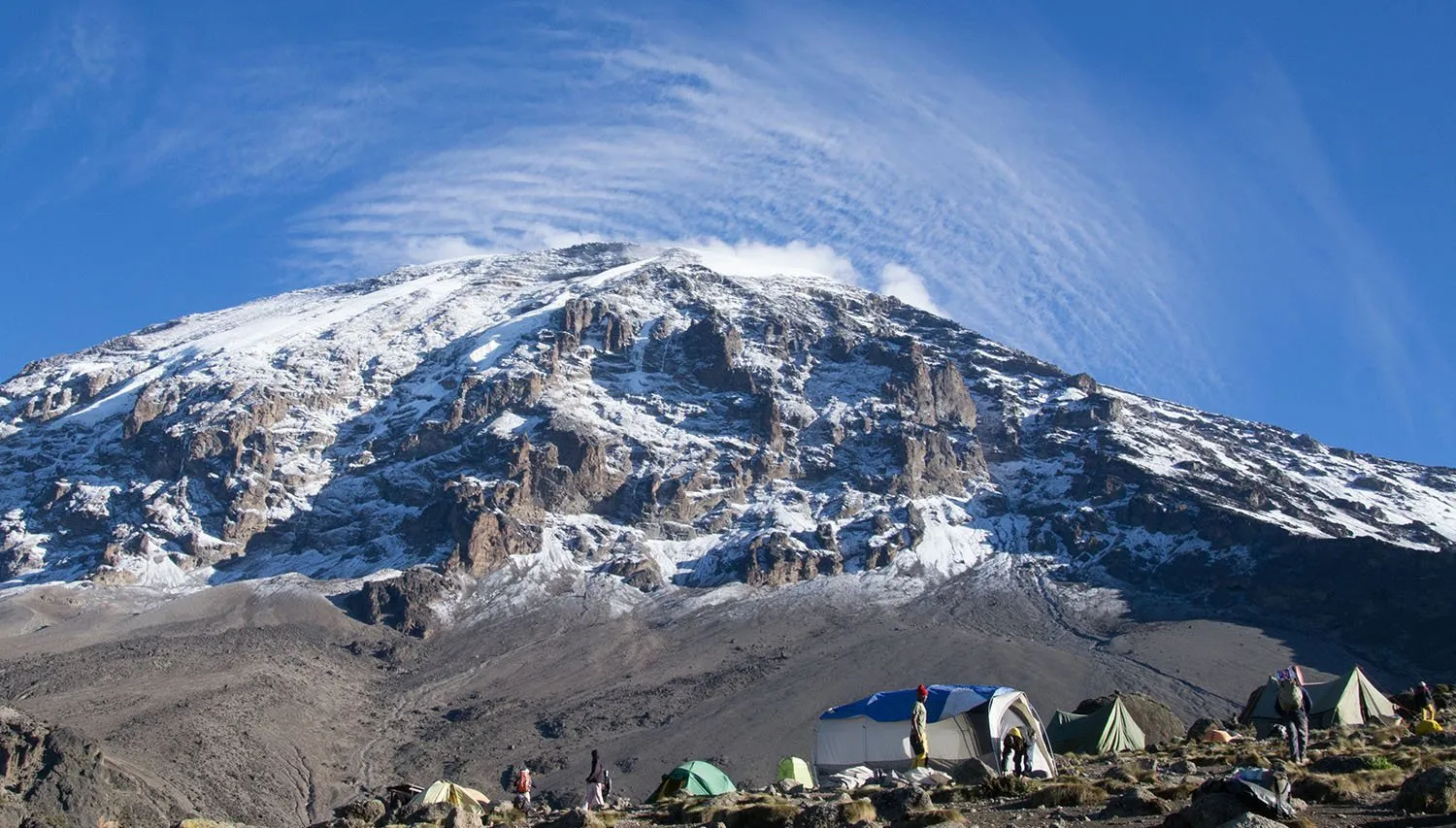
The Marangu Route is the oldest and most established route on Kilimanjaro, and the only one offering sleeping huts along the way. Often called the "Coca-Cola Route," it approaches the summit from the southeast. While it has a gradual ascent, the standard 5-day itinerary is best extended to 6 days for better acclimatization. The hut accommodation makes it popular with trekkers who prefer not to camp.

Highlights

Hut accommodation
Gentle gradient
Same ascent/descent route
Uhuru Peak summit
Rainforest trail
Historic route

Day-by-Day Itinerary

Morning transfer from Moshi to Marangu Gate (1,860m) for registration and final gear check. Begin a gentle 3-4 hour trek (approx. 8 km) through dense, moss-draped rainforest on a well-maintained trail. Watch for black-and-white colobus monkeys, blue monkeys and exotic birdlife. Arrive at Mandara Huts (2,700m) - a cluster of A-frame wooden huts around a central dining hall. Hot lunch and three-course dinner served. Optional short afternoon walk to Maundi Crater for Kenya border views. Elevation gain: 840m.

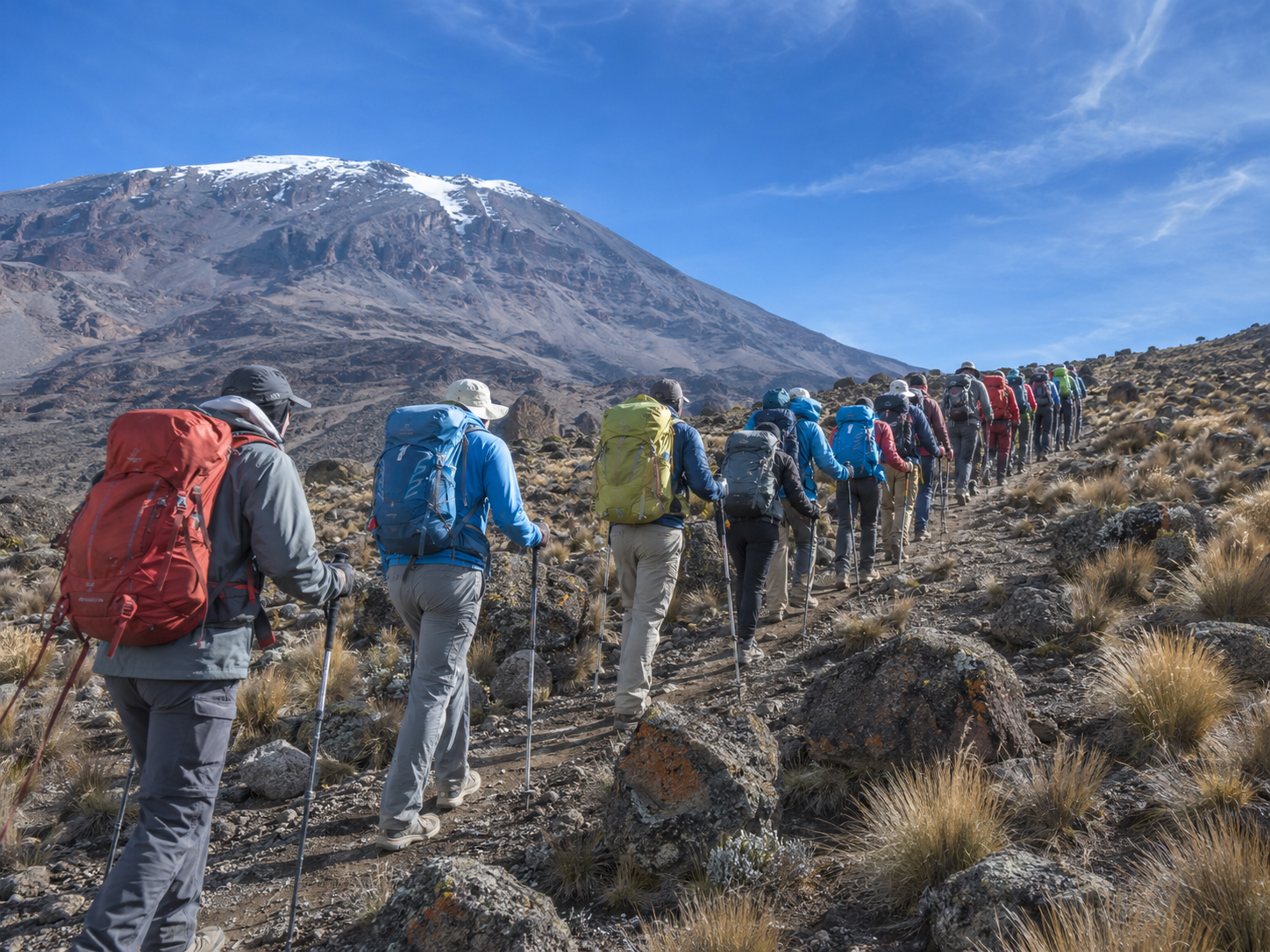
After breakfast, continue through forest that gradually thins into giant heather and open moorland. 5-6 hour hike (approx. 12 km) with the first dramatic views of Mawenzi and Kibo peaks rising ahead. Arrive at Horombo Huts (3,720m), perched on a ridge with panoramic views of the mountain and the Kenyan plains below. Afternoon rest and hot drinks. Dinner in the dining hut with fellow trekkers. Elevation gain: 1,020m.

A crucial rest and acclimatization day - the single biggest contributor to summit success. Morning hike up to Zebra Rocks (4,020m) - striking black-and-white streaked cliffs - then optional continuation up the Mawenzi ridge before descending back to Horombo (5-6 hours round trip). 'Climb high, sleep low.' Afternoon at leisure. Early dinner and rest. Net elevation gain: 0m (but +300m for acclimatization).

A long day crossing the stark alpine desert known as The Saddle - a vast, windswept lunar landscape between Mawenzi and Kibo. 5-7 hours (approx. 10 km) of moderate ascent, with the summit crater growing closer with every step. Arrive at Kibo Hut (4,700m), a simple stone building below the summit. Early dinner at 5 PM and forced rest; you'll be woken at 11 PM for the summit attempt. Elevation gain: 980m.

Midnight start in the dark and cold. 6-7 hour ascent through loose scree - the hardest part - reaching Gillman's Point (5,681m) at sunrise as the glaciers glow pink, then a further hour along the crater rim to Uhuru Peak (5,895m). Photos and emotional celebrations. 3-4 hour descent back to Kibo Hut, brief rest, then a further 3 hours down to Horombo for an early dinner and a deep, well-earned sleep. Total: 12-15 hours.

Celebratory breakfast with your crew, then begin the long final descent - 5-7 hours (approx. 18 km) all the way back down through moorland and rainforest to Marangu Gate. Farewell ceremony with your crew; tips distributed at the gate. Receive your summit certificates (gold for Uhuru Peak, green for Gillman's Point). Transfer to your hotel in Moshi for a hot shower, massage on request and a celebratory meal.

What's Included

  • Park fees
  • Professional guides and porters
  • Hut accommodation
  • All meals on mountain
  • Oxygen emergency tank
  • Pre-climb hotel
  • Airport transfers

What's Excluded

  • Flights
  • Visa
  • Insurance
  • Sleeping bag
  • Tips
  • Personal gear

Best Time to Climb

Plan around peak wildlife, weather and price windows.

Peak season Shoulder / good Off-season

Cool Dry Season

Peak
January – March

Crystal-clear summit views, cold but dry trails. Generally fewer climbers than the June – October peak. Excellent success rates.

Warm Dry Season

Peak
June – October

The most popular climbing window. Stable weather, dry trails and the highest summit success rates. Trails busier — book early.

Short Rains

Good
December

Brief afternoon showers possible at lower altitudes. Summit conditions usually still good. Quieter trails.

Long Rains

Avoid
April – May & November

Slippery, muddy trails and clouds obscuring summit views. Higher rate of altitude-related issues from cold-wet exposure. Not recommended.

What to Pack

Recommended essentials based on Tanzanian conditions and our 25 years of experience guiding this trip.

Waterproof hiking boots (well broken in)
Trekking poles
Sleeping bag rated to -10°C / 14°F (rentable in Moshi)
Insulated down jacket
Waterproof jacket and pants (hard-shell)
Thermal base layers — top and bottom (merino wool ideal)
Fleece or soft-shell mid-layer
Hiking pants (no jeans) and convertible pants
Wool or synthetic socks (3-4 pairs) plus liner socks
Gaiters
Sun hat, warm beanie and balaclava or buff
Sunglasses with high UV protection (cat. 3 or 4)
Headlamp + spare batteries
Daypack 25-35L
Refillable water bottles + 3L hydration bladder
High-energy snacks (nuts, chocolate, energy bars)
Personal first-aid kit + Diamox if prescribed by your doctor
Quick-dry travel towel and wet wipes

Frequently Asked Questions

No technical climbing experience is needed. Kilimanjaro is a long, high-altitude trek rather than a climb. Excellent fitness is essential.

You should comfortably hike 6-8 hours per day on consecutive days while carrying a light daypack. Three or more months of structured training (hill walks, stair climbing, cardio) is recommended.

It depends on the route and length: Lemosho 8-day ~95%, Machame 7-day ~85%, Marangu 5-day ~50%. Longer itineraries with extra acclimatisation days have markedly higher summit success.

Almost everyone experiences some symptoms above 4,000 m (mild headache, fatigue, breathlessness). Diamox (acetazolamide) helps. Our guides are trained in high-altitude medicine and we carry emergency oxygen and a pulse oximeter.

The recommended pool tip from each climber is $250-300, distributed by your lead guide across the entire crew (guides, porters, cook). Tipping happens at the gate on the descent day.

Three full hot meals per day plus snacks, prepared by our mountain cook. Boiled and filtered drinking water is provided at every camp.

Yes. Most travellers (US, UK, EU, Canada, Australia) can apply for a Tanzania e-visa online (~$50) before travel, or get a visa on arrival at Kilimanjaro International Airport. Allow 7-10 days for e-visa processing.

A Yellow Fever certificate is required only if you are arriving from a yellow-fever country. Recommended (consult your doctor): Hepatitis A, Hepatitis B, Typhoid, Tetanus, and antimalarial prophylaxis.

Strongly recommended for all travellers and mandatory for Kilimanjaro climbers. Make sure your policy covers high-altitude trekking up to 6,000 m if you are climbing.

A 30% deposit confirms your booking. The remaining balance is due 30 days before arrival. We accept bank transfer, credit card and major mobile money providers.

Yes. Vegetarian, vegan, halal, kosher, gluten-free and other dietary needs can be arranged with advance notice — please flag them when booking.

Free cancellation up to 60 days before departure (deposit refunded minus a small processing fee). Cancellations 30-60 days out: 50% refund. Less than 30 days: no refund. We strongly recommend trip-cancellation insurance.
$2,497
per person
Inquire Now Ask on WhatsApp
Ready when you are

Let's Plan Your Marangu Route - Classic Kilimanjaro

Speak with one of our Tanzania experts today. We'll tailor every detail to your dates, your group and your budget — no cookie-cutter trips, just unforgettable adventures.

Inquire About This Trip

Tell us about your dream Tanzania trip

We'll respond within 24 hours with availability, current pricing and a personalised proposal.

Or WhatsApp Us
From $2,497
Inquire Now

Stay Connected

Subscribe to our newsletter for travel tips, special offers, and safari inspiration.